
Piku Finance's Morini StockMarketTRBasisTrade vault, which gives tokenized access to a regulated basis-trade strategy on Borsa Istanbul equities, is live on Turtle, so liquidity providers can deposit USDC on Ethereum and hold a share of a Turkish fund strategy that pays in dollars.
Turtle has distributed the vault to its network of liquidity providers since August 2026, with the strategy yield and the PIKU incentive top-up shown as separate lines on the vault page. Piku vaults hold $26M in TVL today, after a peak of ~$35M and have generated $3.5M+ for depositors. The StockMarketTRBasisTrade vault itself peaked at $5.89M in TVL.
What the vault holds
The vault wraps one strategy from Morini Capital, the curation arm of the Piku ecosystem, which issued three Morini vaults on Ethereum in June 2026 and runs the StockMarketTRBasisTrade vault as the one Turtle distributes. Piku Finance identifies yield opportunities in emerging markets across FX, rates, basis and arbitrage markets and makes them accessible through tokenized products, and the vault runs on Midas infrastructure, with the Midas docs and audits linked from the Turtle vault page.
How the basis trade works
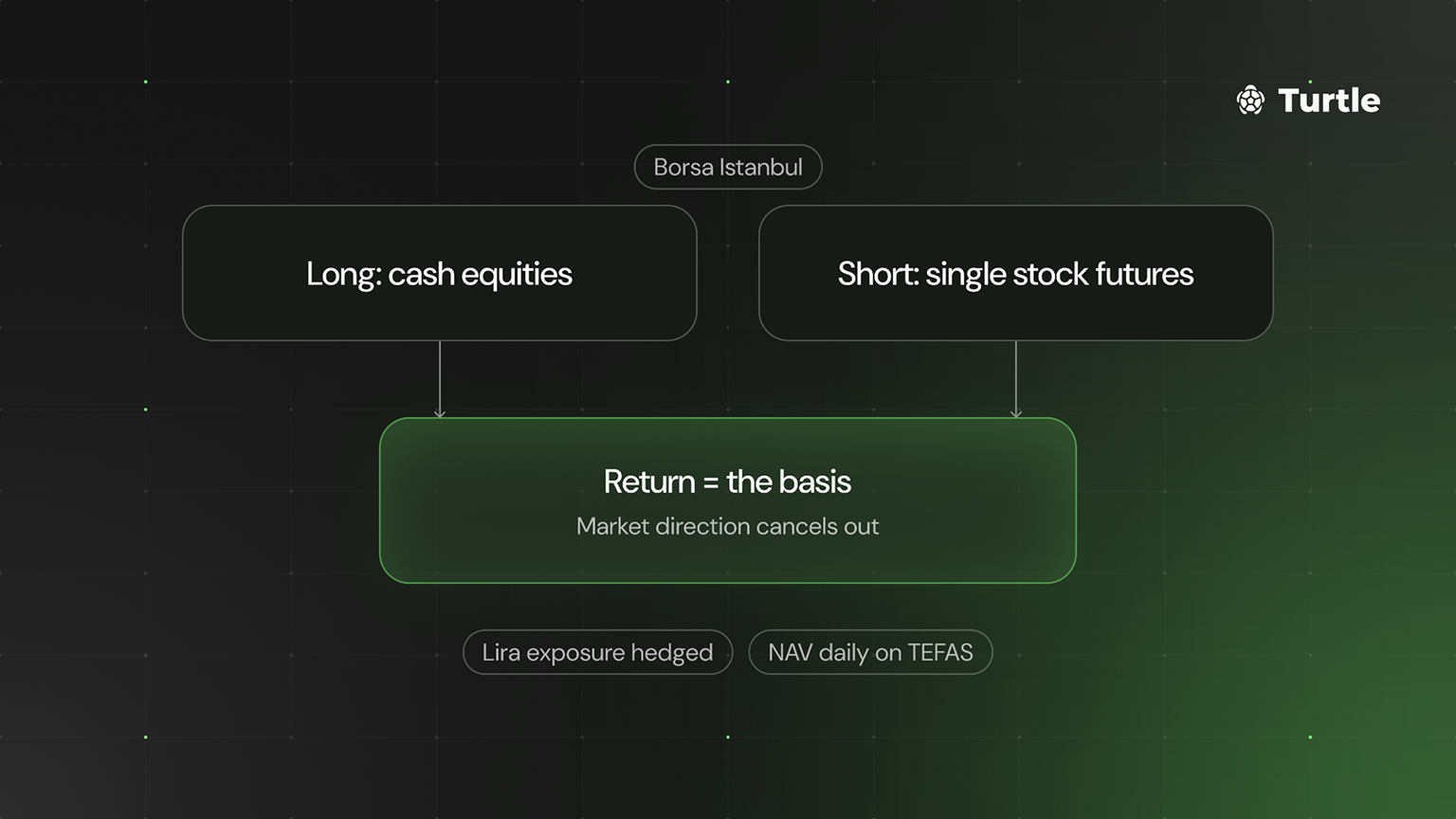
The strategy captures pricing gaps between Turkish cash equities and their single stock futures on Borsa Istanbul, holding the long and the short leg against each other so that the return is the basis between the two prices while market direction drops out, which is what Morini Capital means when it calls the vault delta neutral.
The trade runs inside a fund regulated by Turkey's Capital Markets Board, which hedges its lira exposure and realises returns in USD, and its NAV appears every day on TEFAS, the Turkish fund platform, so a depositor can check the underlying fund's price outside the vault. A regulated fund with a published NAV now issues its vault shares as a transferable token on Ethereum with crosschain deployment on the roadmap, and the vault is the wrapper that does it.
Where the yield comes from
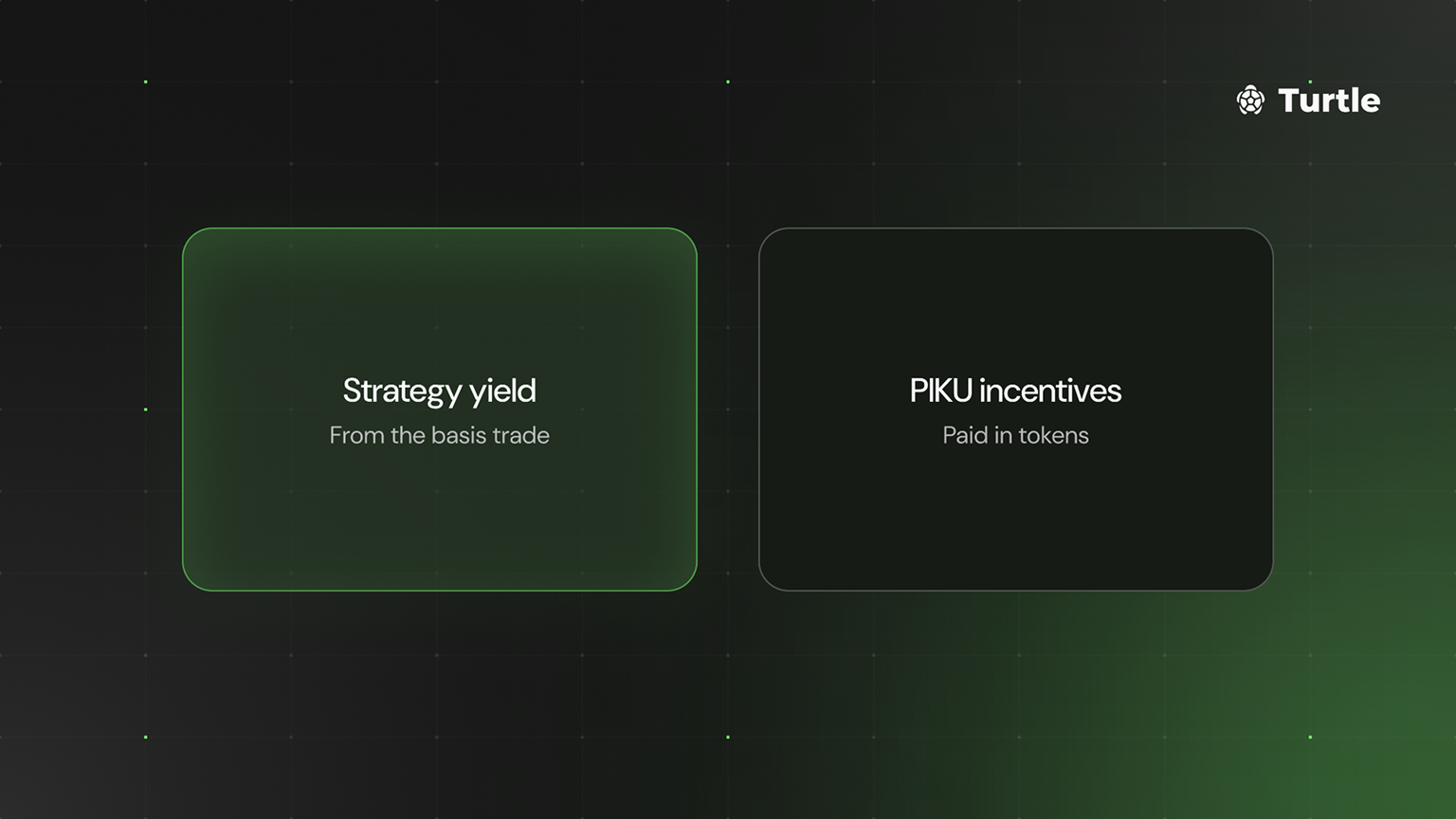
Two lines make up the return, and Turtle shows them apart. The base line is the strategy itself: since the vault launched on 1 June 2026 it has earned ~14% APY, per Piku, and the Turtle vault page showed a trailing 30-day native APY of 5.7% on 10 November 2026 at 16:01 UTC. The figure moves with the basis, so the number on the page at publication is the one that counts. The second line is the PIKU incentive top-up, paid in tokens on top of the strategy return and calculated on the vault page on an $80M FDV assumption, which the page states, so the two lines are two different kinds of return and should be read that way.
Turtle liquidity providers also have an exclusive multiplier that pays for tenure: deposits of $500k or more held for three consecutive months earn a 1.25x PIKU multiplier, six months earns 1.5x applied to the full holding period, there is no lockup, and redemptions settle inside a 48-hour window. Piku charges a 10% performance fee on this vault, with no management fee and no redemption fee, per its platform fees page.
How the fund is wrapped onchain
Depositors supply USDC on Ethereum and receive StockMarketTRBasisTrade vault shares, a transferable token built on Midas infrastructure, and the receipts sit next to the deal. Piku publishes vLayer attestations for the vault on a recurring basis, each generated from the original statement the regulated fund issues, and the latest, dated 30 October 2026, shows 100.2% collateralization, meaning the fund held more assets in backing than the vault's onchain deposits on that date. The attestation does for the vault what a custodian's holdings statement does for a fund, stating with a date that the assets in backing exceed the claims on them, and its dashboard is the transparency source on the Turtle vault page, next to the Midas docs and audits. Piku's own documentation describes custody through Fireblocks MPC for operations and Safe multisig vaults for treasury, with third-party audits of core contracts before deployment.
What Turtle does here
Turtle is a liquidity distribution protocol for onchain assets, where asset issuers use TurtleOS to find liquidity providers, run outreach, and launch incentives and distribution, with every deposit attributed onchain.
For this vault, Turtle reviewed the deal before it reached its network of liquidity providers, listed it with the yield split out, set the exclusive multiplier that pays Turtle depositors for staying, and records every deposit that arrives through it against the route it took.
Tokenization solves issuance, so Piku and Morini can put a regulated Turkish fund strategy onchain, while finding the capital that wants it, at a price both sides accept, is the layer Turtle runs.
Risks and eligibility
Delta neutral describes the market exposure and not the absence of risk, since the basis can compress, the lira hedge can cost more than planned, and the fund, its counterparties and the vault contracts each carry their own risk, while PIKU incentives are paid in a token whose price moves. The vault page carries the eligibility terms, the docs and the attestation, principal is at risk, and nothing in this post is an offer to deposit or financial advice.
How to participate
Open the vault page on Turtle, connect a wallet on Ethereum, read the eligibility terms and deposit USDC, and the page shows the strategy yield, the PIKU incentives and your holding period from then on.
FAQ
What is the Morini StockMarketTRBasisTrade vault?
A Piku Finance vault on Ethereum, curated by Morini Capital, that gives tokenized access to a regulated delta-neutral basis trade on Borsa Istanbul equities, where depositors supply USDC and receive vault shares.
How do I deposit through Turtle?
Open the vault page on app.turtle.xyz, connect a wallet on Ethereum and deposit USDC, and the page shows the base rate, the PIKU incentives and the eligibility terms before you confirm.
Is the yield guaranteed?
No. The base return depends on the basis the strategy captures and the incentive return depends on the PIKU token price, and Turtle shows both lines with the date they were read.